
Seoraksan peaks first, Jirisan last: timing Korea’s 단풍 before the crowds (and the phrases to book a room)

Korea’s autumn doesn’t arrive all at once. It moves. The red and gold start high in the northeast and roll down the peninsula over three or four weeks, so a mountain that’s bare in the north can still be glowing in the south. That’s the trick most first-timers miss. If you chase the color instead of a single date, you can see peak 단풍 (danpung, autumn foliage) twice in one trip.
Mid-October is the headline. It’s when millions of domestic and international visitors pour into the national parks and mountain temples at the same time, and trails that feel like a quiet forest on a Tuesday turn into a slow-moving queue on Saturday. You can still love it. You just need to be smart about where you point yourself.
Start in the northeast: Seoraksan
Seoraksan (설악산), up in Gangwon Province, colors first. In a normal year the peaks start turning in late September, and the slopes hit full 단풍 around the second week of October. Go here early and you’re ahead of the main wave.
The easy win is the Gwongeumseong cable car, which lifts you most of the way up for a huge view without a brutal climb. If you’ve got legs for it, the Ulsanbawi ridge is the classic, roughly four hours round trip with a staircase near the top that will absolutely find your weak quad. Sinheungsa, the temple at the base, is beautiful in the cold morning light with the colored ridges behind the big bronze Buddha.
One practical note: Seoraksan gets cold fast. By mid-October the summit can be near freezing while the parking lot is mild. Layers, not one big coat.
Middle of the month, middle of the country: Naejangsan
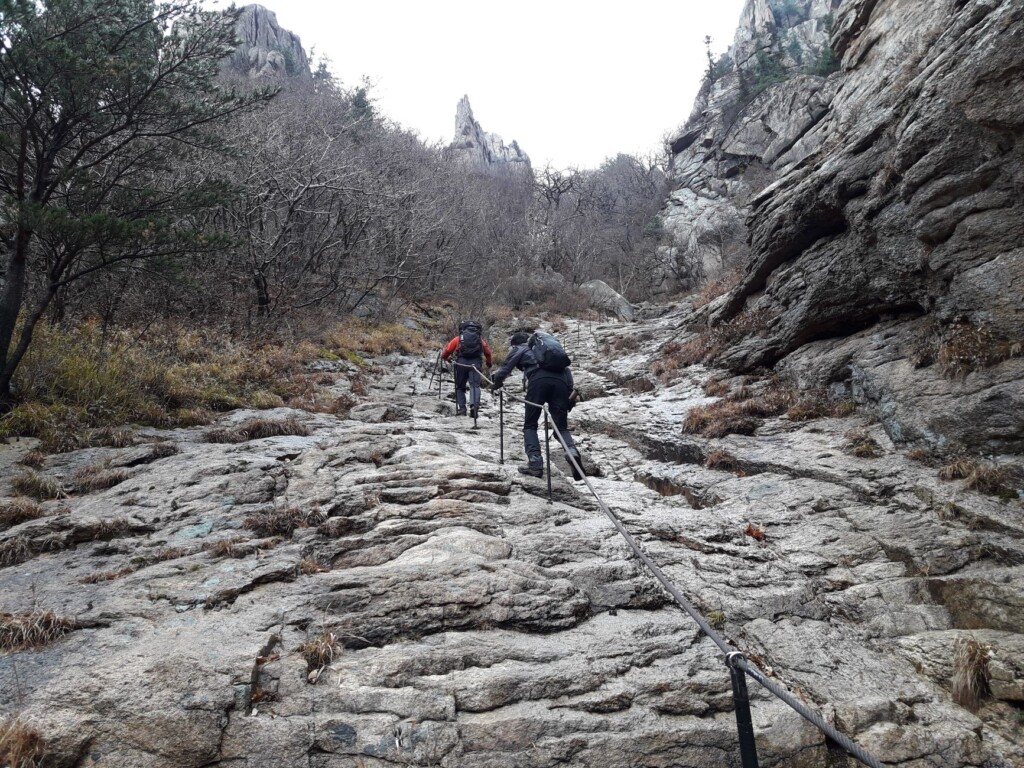
If there’s a mountain Koreans picture when they say 단풍, it’s Naejangsan (내장산) in Jeollabuk-do. The color peaks here around late October into early November, a good two to three weeks behind Seoraksan, and the famous tunnel of maple trees near the entrance is genuinely something. The leaves go a deep, almost glowing red.
This is the one that gets packed. Weekends in peak season mean full buses and a wait for the little cable car up to Seoraebong. My honest advice: come on a weekday, arrive before 9am, and walk the valley loop past Baegyangsa temple. The crowds thin out fast once you’re more than twenty minutes from the gate.
Save the south for last: Jirisan
Jirisan (지리산) is the giant of the mainland and the last to turn, usually late October through early November. Because it’s so big, timing varies by where you stand: the high ridges color before the valleys below. The Piagol valley is the postcard spot, a river of leaves along a stream, and it tends to hold color a little later than everything else.
Jirisan is also a serious mountain. The full ridge traverse is a multi-day thing with mountain shelters you have to reserve in advance. Most visitors do a day hike into one valley and call it a great day, which it is.
A rough timing cheat sheet
- Late Sept to early Oct: Seoraksan peaks (설악산)
- Mid to late Oct: Naejangsan hits full color (내장산)
- Late Oct to early Nov: Jirisan and the deep southern valleys (지리산)
Phrases for the trail
You’ll get by with a map app, but a few words make the day warmer. Koreans on the trail are genuinely friendly, and a greeting goes a long way.
- 안녕하세요 (annyeonghaseyo) – hello. You’ll hear it constantly from hikers passing you.
- 정상까지 얼마나 걸려요? (jeongsangkkaji eolmana geollyeoyo?) – how long to the summit?
- 화장실 어디예요? (hwajangsil eodiyeyo?) – where’s the toilet?
- 단풍이 정말 예뻐요 (danpungi jeongmal yeppeoyo) – the foliage is really pretty. Say it to a stranger and watch them beam.
- 물 좀 주세요 (mul jom juseyo) – some water, please, handy at a rest stop.
Phrases to book a room
In peak season rooms near the parks sell out, so booking ahead matters. Smaller family-run guesthouses (민박, minbak) and motels often don’t show up on international apps, and a phone call or a message in Korean can land you a bed when everything online says full.
- 방 있어요? (bang isseoyo?) – do you have a room?
- 오늘 밤 하루 묵을 수 있어요? (oneul bam haru mugeul su isseoyo?) – can I stay one night tonight?
- 한 명이에요 / 두 명이에요 (han myeongieyo / du myeongieyo) – it’s one person / two people.
- 얼마예요? (eolmayeyo?) – how much is it?
- 조식 포함이에요? (josik pohamieyo?) – is breakfast included?
- 와이파이 있어요? (waipai isseoyo?) – is there wifi?
One more thing that saves trips: in Korea, 민박 and small 펜션 (pension, a holiday rental) owners often prefer a quick Kakao message over a call. A polite 안녕하세요, 방 예약하고 싶어요 (annyeonghaseyo, bang yeyakago sipeoyo, hello, I’d like to book a room) does the job.
So pick your window. Hit Seoraksan the first week of October, drift south as the color does, and finish in a Jirisan valley in early November. You’ll spend less time in traffic and more time under the trees, which is the whole point.
Practice What You Learned
Try these interactive quizzes related to this topic:









Responses