
The phrases that make you sound like a regular, not a tourist, at a Korean table

There’s a moment at every Korean meal where you can tell who’s done this before. It’s small. The way someone turns their head to take a sip, the way they catch the waiter’s eye without waving, the way they clink glasses and say the right thing. These are the korean dining phrases and little rituals that separate a regular from a tourist, and most of them take about five seconds to learn.
Since it’s Wine Day (와인데이), and Koreans happily pour wine, soju, or beer at the same tables, it’s a good excuse to get these down. You don’t need perfect grammar. You need the handful of lines that come up in real korean conversations over food and drinks.
Before you even order: the phrases that open the meal
When you sit down, the first thing a server often says is 뭐 드릴까요? (mwo deurilkkayo, “what can I get you?”). You don’t have to answer in a full sentence. Point and say the dish plus 주세요 (juseyo, “please give me”).
Two lines do most of the heavy lifting here:
- 이거 주세요 (igeo juseyo) means “this one, please.” Say it while pointing at the menu or a neighbor’s table. Nobody minds.
- 저기요 (jeogiyo) is how you call a server. Not “excuse me” in English, not a raised hand held in the air forever. Just a clear 저기요. Regulars say it without flinching.
Want recommendations? Ask 여기 뭐가 맛있어요? (yeogi mwoga masisseoyo, “what’s good here?”). Servers love this one, and the answer is usually genuinely the thing to order.
Pouring and clinking: the part tourists always get wrong
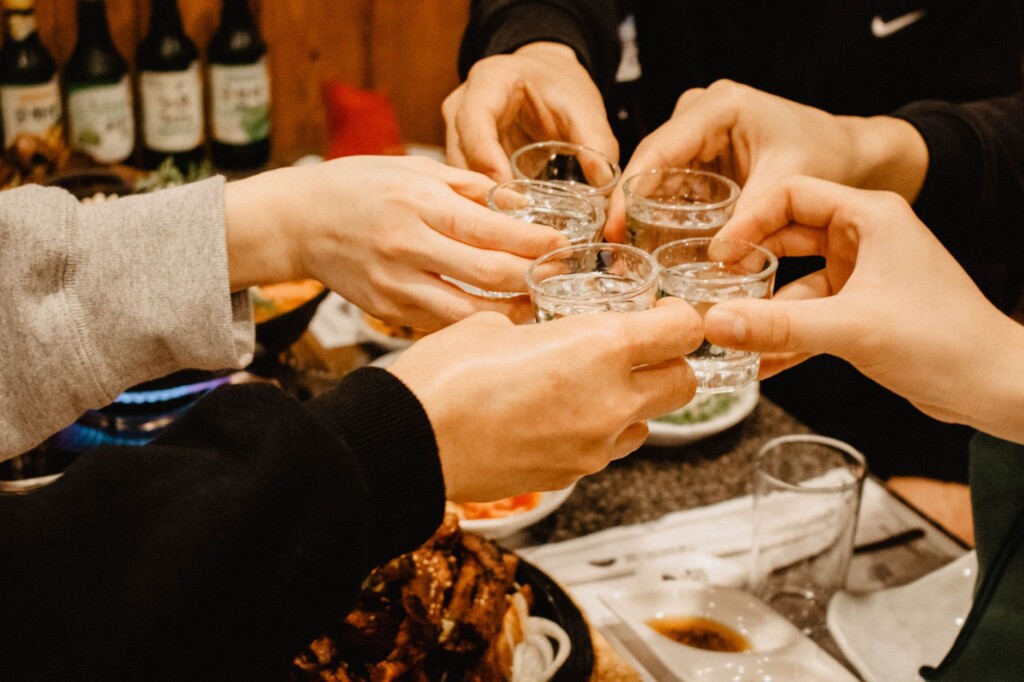
Drinking culture is where small habits give you away fastest. On Wine Day you’ll likely be pouring for each other, and there are rules, but they’re easy.
You never pour your own glass first. You pour for others, and someone pours for you. When an older person or someone senior pours for you, hold your glass with both hands, or at least touch your pouring arm with your free hand. It reads as respect without you saying a word.
When you pour for someone older, same thing: two hands on the bottle. And when the glasses go up, the word you want is 건배 (geonbae), which is your all-purpose “cheers.” There’s also 짠 (jjan), which is more like the sound of the clink itself, casual and fun among friends.
One more that earns instant points. If someone’s glass is empty, say 한 잔 더 하세요 (han jan deo haseyo, “have one more glass”) and pour it for them. That’s the move of someone who belongs at the table.
While you eat: reacting like a local
A tourist eats quietly. A regular reacts. Korean meals are noisy in the best way, full of small verbal responses, and you only need a few.
- 맛있어요! (masisseoyo, “it’s delicious”) said with a bit of energy. The energy matters more than the pronunciation.
- 와, 진짜 맛있다 (wa, jinjja masitda, “wow, this is really good”). The 진짜 (jinjja, “really”) is what makes it sound unscripted.
- 배불러요 (baebulleoyo, “I’m full”) when you can’t finish. Nobody expects you to clear the plate.
If something’s too spicy and you need rice or water, 물 좀 주세요 (mul jom juseyo, “some water, please”) is your friend. That little 좀 (jom) softens the request and makes it sound natural instead of textbook.
Little add-ons that cost nothing
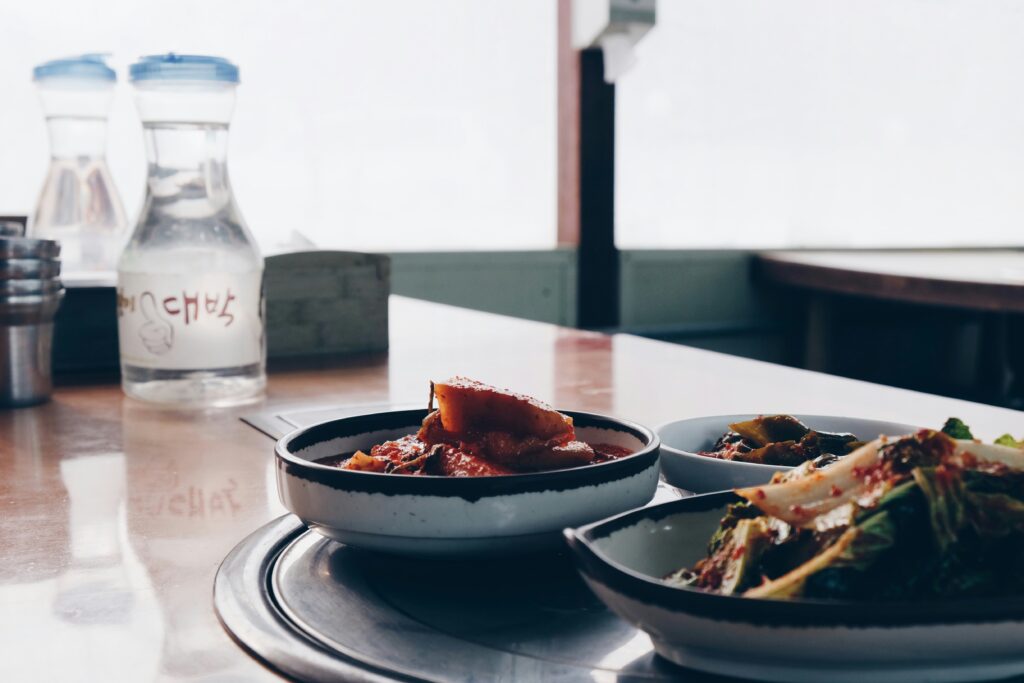
Korean side dishes (반찬, banchan) are usually free refills. You just have to ask. Say 반찬 좀 더 주세요 (banchan jom deo juseyo, “a little more banchan, please”) and it appears. Tourists sit there wondering if they’re allowed. Regulars just ask.
Need scissors for the meat, more water, or another plate? The pattern is always the same: the thing plus 좀 더 주세요. Learn the shape once and you can slot in almost anything.
Paying without the awkward dance
At the end, you usually pay at the counter, not the table. When you’re ready, say 계산할게요 (gyesanhalgeyo, “I’ll pay”) or 얼마예요? (eolmayeyo, “how much is it?”). If a Korean friend fights you for the bill, that’s normal. Offering to pay by saying 제가 낼게요 (jega naelgeyo, “I’ll get this”) is itself a warm, very local gesture, even if you lose the argument.
Why these beat perfect grammar
You could study verb conjugations for months and still freeze at a real table. Meanwhile someone who knows 저기요, 건배, 맛있어요, and 한 잔 더 하세요 slides right in. These phrases do more than carry information. They signal you know how the room works.
So this Wine Day, pick three of these and actually use them. Pour with two hands. Say 건배 like you mean it. Ask what’s good. The food tastes the same either way, but you’ll feel the difference in how people respond to you.
Practice What You Learned
Try these interactive quizzes related to this topic:









Responses