
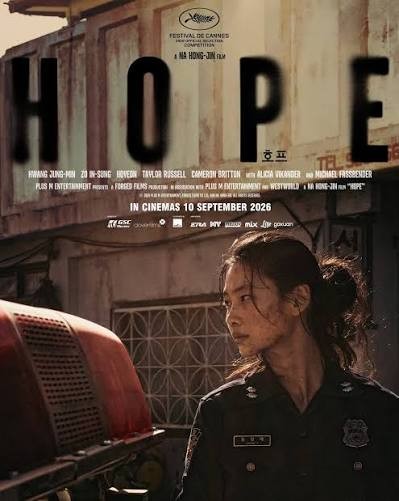
Wait, There’s a Korean Movie Called “Hope”? Here’s Why Everyone’s Talking About It

So you’ve been hearing buzz about a movie called “Hope” and wondering what all the excitement is about? Let’s clear something up first — and it’s a wonderful thing to discover. While Hollywood loves a hopeful title, one of the most emotionally powerful films to carry this name comes from Korea. It’s called 희망 (huimang, “hope”), released internationally as Hope (also known by its Korean title 소원 / Sowon, meaning “wish”).
If you’re learning Korean, this is the kind of film that teaches you more than vocabulary — it teaches you how Koreans express resilience, family love, and quiet courage. Grab some tissues, because we’re going in.

What Is “Hope” Actually About?
Directed by Lee Joon-ik and released in 2013, Hope tells the story of a young girl named So-won and her family as they rebuild their lives after a devastating tragedy. It’s based on real events, which is exactly why it hit Korean audiences so hard and continues to resurface in international conversations about meaningful cinema.
The film doesn’t sensationalize pain. Instead, it focuses on recovery, community, and love — how a broken family slowly finds their footing again. That’s the genius of it. The Korean word 소원 (sowon, “a wish”) is the daughter’s name, and the whole film becomes a wish for healing.
Here are two words that sit at the heart of the story:
- 희망 (huimang) — hope
- 소원 (sowon) — a wish or heartfelt desire
- 가족 (gajok) — family
Notice how the whole emotional core of the movie can be summed up in just three words. That’s a beautiful thing about Korean — a single word often carries deep feeling.
Why Is Everyone Talking About It Now?
Great films have a way of finding new audiences. Thanks to streaming platforms and passionate movie fans on social media, Korean cinema has exploded globally — think Parasite, Train to Busan, and beloved dramas. Curious viewers going down the Korean-film rabbit hole keep stumbling onto Hope, and word spreads fast because the emotional impact is unforgettable.
It also won Best Film at the Blue Dragon Film Awards (a huge deal in Korea — think of it like Korea’s Oscars). When people search for the “best Korean movies to cry to,” this one lands near the top of nearly every list.
The Juicy Details Fans Love
- The father’s transformation: Sol Kyung-gu plays a distant dad who learns to truly show up for his daughter — a performance widely praised as career-best.
- The mascot costume scenes: To connect with his frightened daughter, the father wears a cartoon costume, creating some of the film’s most tender, tear-jerking moments.
- Real emotional realism: Rather than a villain-driven revenge plot, the film chooses healing over vengeance — a refreshing, mature storytelling choice.
A useful phrase here is 괜찮아 (gwaenchana, “it’s okay” / “I’m okay”). You’ll hear versions of this comforting phrase throughout Korean films and dramas whenever someone is reassuring a loved one. It’s one of the most-used everyday expressions in Korean, so learning it now is a real win.
Korean Words to Learn From “Hope”
Watching a film like this is one of the best ways to absorb natural, emotional Korean. Here are some terms that will come alive as you watch:
- 사랑 (sarang) — love
- 용기 (yonggi) — courage
- 힘내 (himnae) — “stay strong” / “you’ve got this”
- 고마워 (gomawo) — thank you (casual)
- 아빠 (appa) — dad
- 딸 (ttal) — daughter
Try this: when you watch, keep a small mental list of these words and count how many times you hear 괜찮아 (gwaenchana) and 힘내 (himnae). You’ll be amazed how quickly your ear starts recognizing them.

How to Watch It the Smart Way (for Learners)
Here’s a friendly study strategy that turns movie night into a language lesson:
- First watch: Just enjoy it with English subtitles. Let the story move you.
- Second watch: Switch to Korean audio and pay attention to family words like 아빠 (appa) and 가족 (gajok).
- Third pass: Rewatch a few key scenes and repeat short lines out loud. Shadowing emotional dialogue helps your pronunciation and intonation more than textbook drills.
Because the vocabulary is emotional and repeated often, it sticks. You’re not just memorizing — you’re feeling the words, which is exactly how real fluency grows.
The Bigger Picture: Why Korean Films Travel So Well
Movies like Hope prove something exciting: Korean storytelling connects across every culture and language. The themes — family, resilience, second chances — are universal, but the way Koreans express them, with restraint and warmth, feels uniquely moving. That’s a big reason global audiences keep falling in love with Korean cinema and, in turn, the Korean language.
So if you came here expecting a Hollywood blockbuster, I hope you’ll give this quieter, deeper “Hope” a chance. It might just become the film that makes you fall in love with learning Korean.
Your Takeaway
Learn these three first and you’ll already understand the soul of the movie: 희망 (huimang, hope), 가족 (gajok, family), and 괜찮아 (gwaenchana, it’s okay). Watch, listen, repeat — and let a great story teach you. 힘내 (himnae) — you’ve got this!
Practice What You Learned
Try these interactive quizzes related to this topic:














Responses