
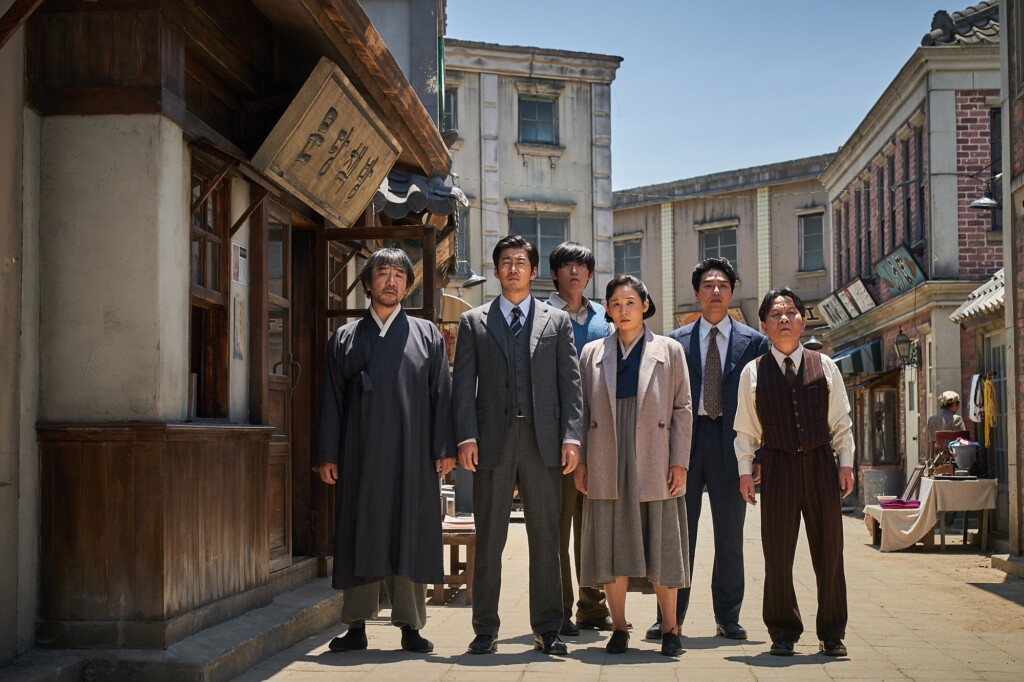
Hangul almost died, and not once, but twice. Here’s who saved it

Walk down any street in Seoul today and 한글 (Hangeul, the Korean alphabet) is everywhere, on subway maps, cafe menus, phone screens, song lyrics. It feels permanent, like it was always meant to be here. On 한글날 (Hangeullal, Hangul Day), every October 9th, Koreans and learners around the world celebrate this clever, beautiful writing system that anyone can learn in an afternoon.
So here is the assumption most people make: Hangul was invented in 1443, and from then on, everyone simply used it happily ever after. It is a lovely story. It is also not quite what happened.
The truth is that Hangul almost disappeared, and not just once. It survived centuries of being dismissed, banned, and finally targeted for destruction, and it only reached us because real people paid for it with 피 땀 눈물 및 희생 (pi ttam nunmul mit huisaeng, blood, sweat, tears, and sacrifice).
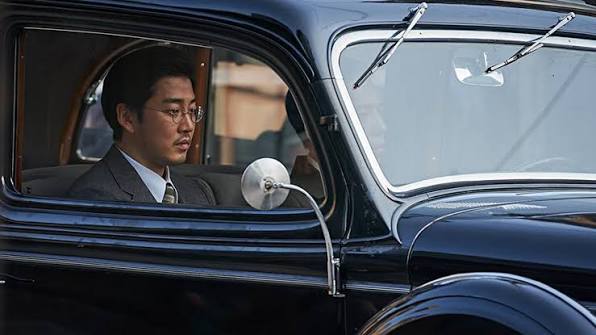
A gift the elite tried to bury
Hangul was created by 세종대왕 (Sejong Daewang, King Sejong the Great) during the 조선시대 (Joseon sidae, Joseon Dynasty). In 1443 he completed the alphabet, and in 1446 he published it under the name 훈민정음 (Hunminjeongeum, ‘the correct sounds to instruct the people’). His goal was radical for its time: ordinary farmers, women, and children could not read the complex Chinese characters used by scholars, so he gave them something simple enough to learn quickly.
But the 양반 (yangban, the aristocratic scholar class) were not thrilled. Many of them looked down on Hangul, calling it 언문 (eonmun, ‘vulgar script’), beneath serious learning. For centuries, official documents, exams, and prestige stayed with Chinese characters. Hangul survived in the margins, used in women’s letters, folk novels, and personal notes. It was alive, but barely, kept breathing by common people rather than the powerful.
That alone is a quiet kind of rescue. Every grandmother who wrote a letter in Hangul, every novelist who published a story people could actually read, was keeping the flame lit.
The era when speaking Korean became dangerous
Then came the darkest chapter: the 일제 강점기 (Ilje gangjeomgi, the Japanese colonial period, 1910 to 1945). When Japan annexed Korea in 1910, the goal was not just to rule the land. It was to erase the Korean identity entirely, what people at the time understood as an attempt to kill the Korean spirit itself.
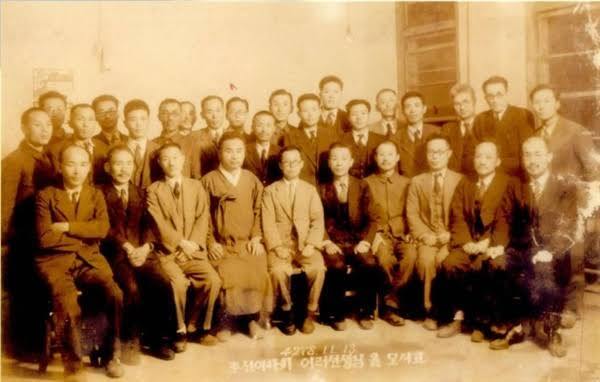
The Japanese colonial government moved to replace Korean with Japanese in every public space. By the late 1930s, Korean was banned in schools. Children were punished for speaking their own 모국어 (mogugeo, mother tongue). Families were pressured into adopting Japanese names under a policy called 창씨개명 (changssigaemyeong). Newspapers printed in Korean were shut down. If a language dies, a people’s memory, its songs, its way of thinking, dies with it, and that was precisely the point.
Against this, a group of scholars and patriots, the kind of people Koreans honor as 열사 (yeolsa, martyrs who died for a cause), chose to fight back with dictionaries instead of weapons.
The scholars who went to prison for a dictionary
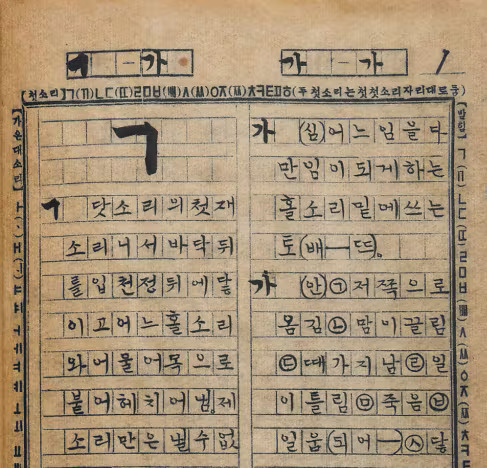
In 1921, Korean linguists founded what became the 조선어학회 (Joseoneo Hakhoe, the Korean Language Society). Quietly and at enormous risk, they worked to standardize Korean spelling, set the rules of grammar, and, most ambitiously, compile a complete Korean dictionary. Preserving the language was an act of resistance, a way to protect the Korean soul when open rebellion meant death.
In 1942, the colonial authorities struck. In what is known as the 조선어학회 사건 (Joseoneo Hakhoe sageon, the Korean Language Society Incident), dozens of scholars were arrested and charged with sedition, simply for studying their own language. They were tortured. Some died in prison from the abuse and the brutal conditions. Their 희생 (huisaeng, sacrifice) was real and physical, paid in blood and broken bodies.
And here is the detail that gives this story its ending: the manuscript of their unfinished dictionary vanished during the chaos. After liberation in 1945, it was discovered, by near miracle, in a warehouse at Seoul Station, where it had sat forgotten for years. That rescued manuscript became the foundation of the great Korean dictionary published in the years after. The spirit the colonizers tried to kill had survived in a box of paper.
Why October 9th is more than a day off
This is why 한글날 is not simply a celebration of a clever alphabet. It is a day of gratitude. When you sound out 안녕하세요 (annyeonghaseyo, hello) or 감사합니다 (gamsahamnida, thank you), you are using letters that a king designed for the powerless and that martyrs died to protect.
You can even feel this history in a few words worth learning today:
- 한글 (Hangeul) — the Korean alphabet itself
- 모국어 (mogugeo) — mother tongue, the language of one’s people
- 열사 (yeolsa) — a patriotic martyr who sacrificed for a cause
- 희생 (huisaeng) — sacrifice
- 자부심 (jabusim) — pride, the quiet pride Koreans feel in Hangul
Here is your learner’s takeaway: the next time Hangul frustrates you, remember that its simplicity was a deliberate gift, built so that anyone, including you, could learn it fast. People bled so this alphabet would reach the future. The best way to honor that is simply to keep learning it.
So on this 한글날, sound out one new word. It is a small thing. But you are carrying forward something that very nearly did not survive, and that is worth celebrating.
Practice What You Learned
Try these interactive quizzes related to this topic:













Responses