
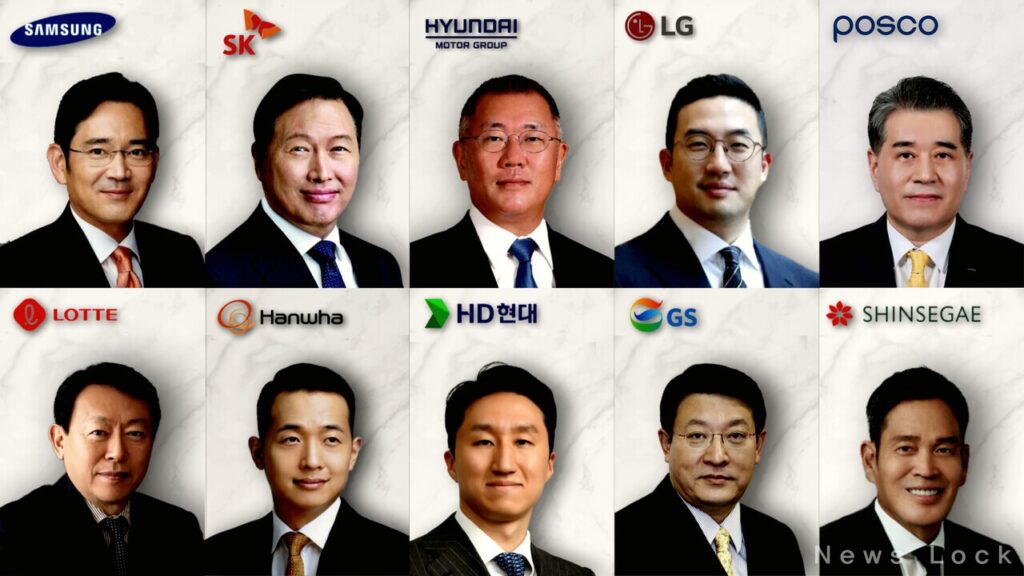
Chaebol Secrets: 7 Jaw-Dropping Facts Behind Korea’s Richest Families

If you’ve ever watched a K-drama where a mysterious rich heir drives a supercar and inherits an empire, you’ve already met the world of the 재벌 (jaebeol, chaebol). But the real stories behind Korea’s mega-rich families are somehow even more dramatic than fiction. Ready for the juicy stuff? Let’s dive in.
First, a quick refresher
The word 재벌 (jaebeol) literally combines 재 (jae, wealth) and 벌 (beol, clan or family). So it’s not just “a big company” — it’s a wealthy family clan that controls a sprawling network of businesses. That family angle is exactly why the drama never stops.
Think Samsung, Hyundai, LG, SK, Lotte. These aren’t just brands — they’re dynasties. And like all dynasties, they come with secrets.
![초격차 覇者 이건희 지다 ③] 내성적인 소년에서 글로벌 CEO로… 다사다난했던 가족사 < 경제 < 기사본문 - 민주신문](https://cdn.iminju.net/news/photo/202010/58851_55095_5529.jpg)
1. One family can touch almost every part of your day
Wake up on a Samsung mattress, check your Samsung phone, ride in a Hyundai car, shop at a Lotte department store, and grab a snack made by a chaebol food brand. In Korea, it’s genuinely hard to go a full day without giving money to a chaebol. The Korean word for this kind of sprawling business empire is 대기업 (daegieop, large conglomerate) — a term you’ll hear constantly in the news.
2. The heirs are basically Korean royalty
Chaebol heirs are followed by the press the way celebrities are. Their weddings, divorces, fashion choices, and family feuds become national headlines. Koreans even have a nickname for the pampered third-generation heirs: 재벌 3세 (jaebeol samse, third-generation chaebol heir). When someone acts spoiled or entitled, friends might jokingly say they’re acting like a 재벌 3세.
Learner tip
The counter 세 (se) means “generation.” So 1세 (ilse) is the founder, 2세 (ise) the children, and 3세 (samse) the grandchildren. Handy for understanding any family-business story!
3. Real family feuds put K-dramas to shame
Inheritance battles between siblings are legendary. Brothers have taken each other to court over control of empires, and cousins have split companies in bitter public disputes. These sagas are so juicy that they inspire actual TV shows. The Korean phrase 형제의 난 (hyeongjeui nan, the brothers’ rebellion) is sometimes used in the media to describe these dramatic sibling power struggles.
4. There’s a special word for their arrogance
A few years back, a chaebol family member made global headlines for a shocking display of temper on an airplane. It sparked a huge cultural conversation about entitlement. Koreans use the word 갑질 (gapjil, abuse of power by someone in a superior position) to describe when powerful people mistreat those below them. Understanding 갑질 tells you a lot about modern Korean social values — people are increasingly refusing to tolerate it.
Learner tip
갑 (gap) is the powerful party in a contract, and 을 (eul) is the weaker one. So 갑질 is “acting like the gap” — throwing your power around. It’s one of the most useful modern slang terms you can learn.

5. Many started from almost nothing
Here’s the inspiring part: several chaebol founders began with tiny operations. Hyundai’s founder famously started with a small auto repair shop and even herded cattle as a young man. Samsung began as a modest trading company selling dried fish and noodles. Their rise mirrors Korea’s own transformation, often called the 한강의 기적 (Hangangui gijeok, the Miracle on the Han River) — the country’s astonishing economic boom after the Korean War.
6. They’re deeply woven into pop culture
Ever notice how many K-dramas feature a cold, handsome chaebol lead? That’s no accident. The rich-heir-falls-for-ordinary-girl storyline is a genre staple. When you spot one, you can impress your friends by pointing out the 재벌 trope. Watch for phrases like 회장님 (hoejangnim, chairman/company president) — the powerful patriarch character — and 비서 (biseo, secretary), who always knows every family secret.
7. The government has a love-hate relationship with them
Chaebols powered Korea’s economic miracle, but their enormous influence also worries many people. There are ongoing debates about fairness, small business protection, and corporate reform. You’ll often hear the word 경제 (gyeongje, economy) paired with discussions about them. It’s a great window into how Koreans think about wealth, power, and society.
Vocabulary you actually learned today
- 재벌 (jaebeol) — wealthy family conglomerate
- 대기업 (daegieop) — large corporation
- 재벌 3세 (jaebeol samse) — third-generation heir
- 갑질 (gapjil) — abuse of power over someone weaker
- 회장님 (hoejangnim) — chairman/president
- 한강의 기적 (Hangangui gijeok) — the Miracle on the Han River
Your takeaway
Understanding chaebols isn’t just gossip — it’s a shortcut to understanding modern Korea, its dramas, its news, and its everyday conversations. Next time you watch a series with a brooding heir or read a headline about 갑질, you’ll catch layers most learners miss. Keep collecting these cultural clues, and your Korean will feel richer and more alive with every episode. 화이팅! (hwaiting, you’ve got this!)
Practice What You Learned
Try these interactive quizzes related to this topic:












Responses