
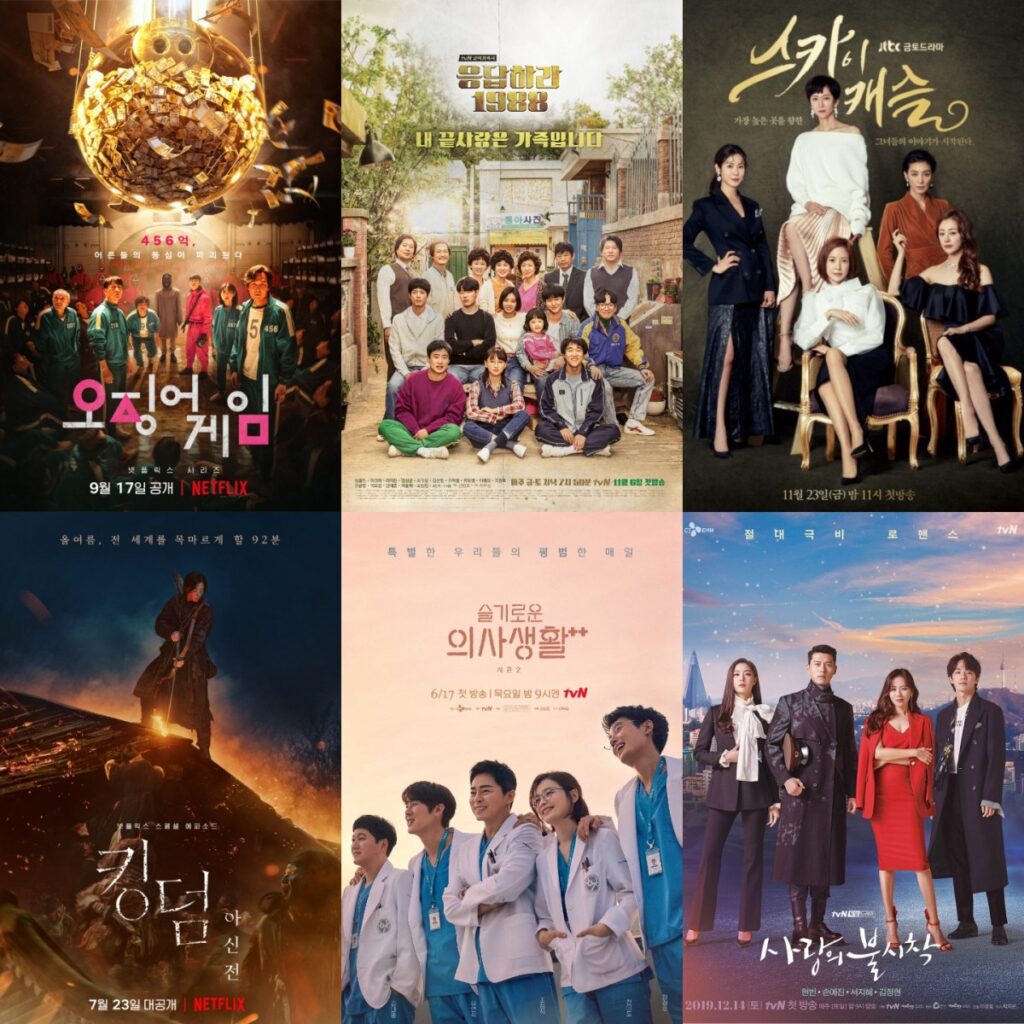
You memorized that K-drama phrase and forgot it by morning. Here’s the fix

You paused the episode. You rewound it three times. You whispered that line back to your screen: “괜찮아, 다 잘 될 거야” (gwaenchana, da jal doel geoya — “It’s okay, everything will be fine”). It felt burned into your brain. Then morning came, and it was gone. If this is your life, the problem isn’t your memory — it’s your method. The fix is korean conversation practice that turns passive recognition into active recall.
Let’s talk about why that beautiful phrase evaporated, and how to make the next one stay.
Why K-drama phrases don’t stick
Watching a K-drama feels like studying, but your brain is doing something very different. When you hear a line on screen, you recognize it — the subtitles, the actor’s face, the music all hand you the meaning. That’s a low-effort, low-retention state.
Real learning happens through retrieval: pulling a phrase out of your own head with no hints. Recognition and retrieval feel similar in the moment, but only one builds long-term memory. This is the gap nobody warns you about.
There’s also the context problem. You learned “진짜?” (jinjja? — “Really?”) attached to a specific dramatic scene. Strip that scene away and your brain has nothing to grab. Phrases without varied context are like keys without a keyhole.
The three-part fix
1. Recall before you look
Before you check the meaning, force yourself to remember. Cover the subtitle. Ask: what did she just say, and why? Even a wrong guess strengthens the memory more than a correct passive read. This tiny struggle is the whole point.
Try it with a line like “밥 먹었어?” (bap meogeosseo? — “Have you eaten?”), one of the most common practical Korean phrases in real life. Koreans use it as a caring greeting, not a literal question. Say it out loud, from memory, before confirming.
2. Space it out
Your brain forgets on a predictable curve. The fix is spaced repetition: review a phrase right when you’re about to forget it — a day later, three days later, a week later. Each well-timed recall flattens the forgetting curve a little more.
This is boring to schedule by hand, which is exactly why most learners quit. Which brings us to the modern shortcut.

3. Speak it to something that answers back
Reading a phrase is not the same as saying it under mild pressure. To build speaking confidence, you need to produce Korean in a back-and-forth exchange — where a reply depends on what you actually said.
Where AI-assisted learning changes the game
Here’s the trending shift worth paying attention to: AI conversation partners now let you rehearse a phrase in dozens of contexts, on your schedule, with zero social anxiety.
Instead of one frozen K-drama scene, an AI tutor can throw “밥 먹었어?” at you as a text from a friend, a question from a coworker, and a grandmother’s greeting — same phrase, three flavors. That variety is what welds a phrase into memory for good.
Good AI-assisted korean conversation practice does a few things a Netflix binge simply can’t:
- Instant correction. Mispronounce “어” and “으” and it flags you gently, so bad habits don’t set in.
- Adaptive difficulty. It notices which phrases you keep fumbling and resurfaces them at the right moment — automatic spaced repetition.
- Judgment-free reps. You can say “다시 말해 주세요” (dasi malhae juseyo — “Please say that again”) fifty times with no embarrassment.
- Roleplay on demand. Order at a café, argue playfully, comfort a friend — the exact scenarios your favorite drama modeled.
The goal isn’t to replace human conversation. It’s to arrive at that first real Korean chat already warmed up, so your speaking confidence doesn’t collapse the moment a native speaker replies faster than expected.
A simple daily loop that actually works
Pull this together into a five-minute routine:
- Harvest one phrase from whatever you’re watching — just one. Write down when and why it was used.
- Recall it cold a few hours later, out loud, without looking.
- Drill it in an AI chat across two or three different situations that same evening.
- Let spaced repetition bring it back tomorrow, then next week.
One phrase a day is 365 practical Korean phrases a year — the useful kind you can actually deploy in a real conversation, not the kind that dissolves by breakfast.
The mindset flip
Stop treating K-dramas as a textbook. They’re a phrase source, a giant menu of natural, emotional, real-sounding Korean. The learning happens in what you do after you hit pause: recall it, space it, and speak it to something that responds.
The next time a line grabs you — maybe a soft “고마워” (gomawo — “thanks”) or a dramatic “내가 지킬게” (naega jikilge — “I’ll protect you”) — don’t just admire it. Run the loop. That’s the difference between a phrase you watched and a phrase you own.
Practice What You Learned
Try these interactive quizzes related to this topic:











Responses