
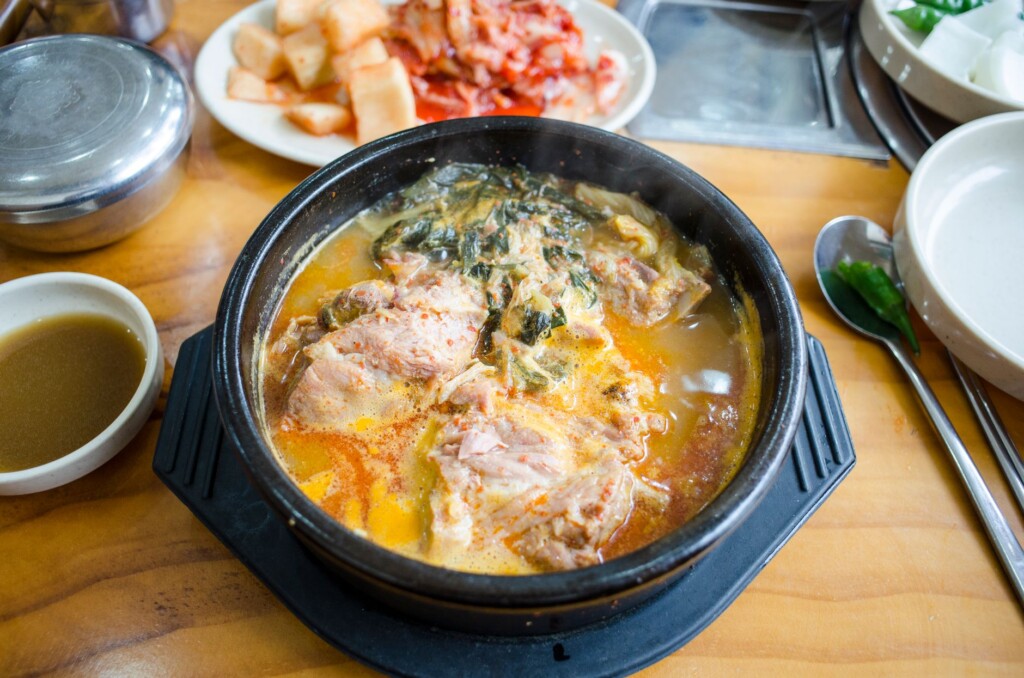
The Korean word for ‘stew weather’ exists, and these 7 jjigae prove it right

There’s a certain kind of day in Korea. The sky goes flat and grey, your breath shows up in the air, and someone at work says it out loud: 찌개 날씨 (jjigae nalssi), literally “stew weather.” It’s not an official phrase you’ll find in a textbook. It’s just what people say when the cold makes them crave something hot, salty, and bubbling in a little earthenware pot.
November is when this phrase earns its keep. The temperature drops, and soft tofu stew, soybean paste stew, and army base stew start showing up on every lunch table. Here are seven jjigae to know, plus the words that let you talk about them like you’ve been doing this for years.
Quick note before we start: 찌개 (jjigae) is a thick, strongly seasoned stew meant to be shared from the middle of the table. Don’t confuse it with 국 (guk), a lighter soup you get in your own bowl. Jjigae is bolder, saltier, and built for dipping rice into.
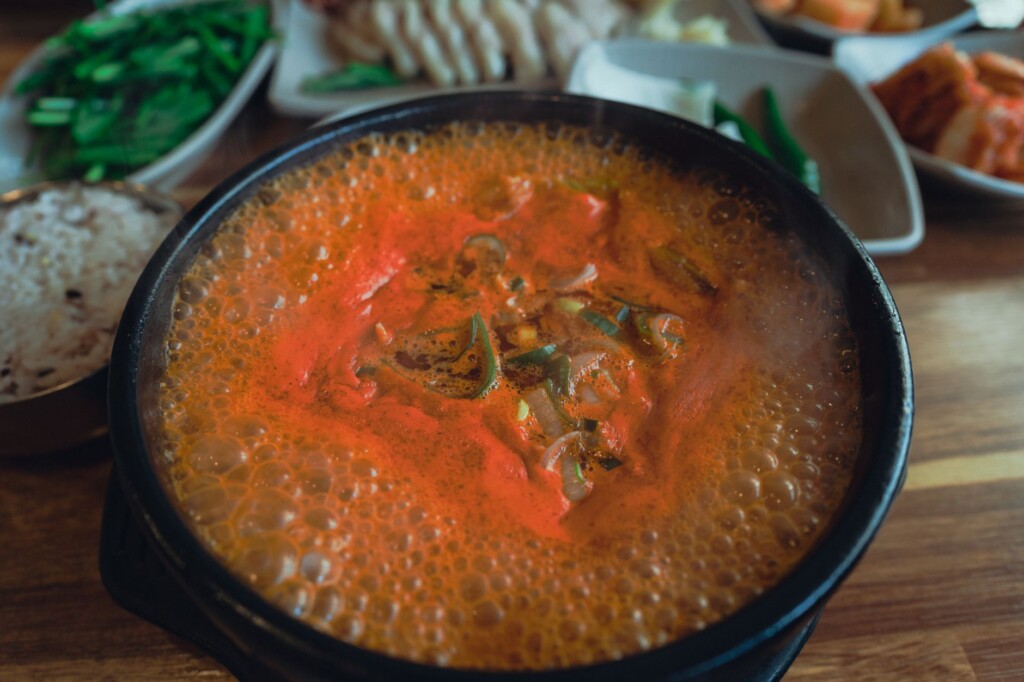
1. Sundubu-jjigae (순두부찌개), soft tofu stew
This is the one people reach for first when it’s cold. 순두부 (sundubu) means “soft tofu,” the uncurdled kind that falls apart like custard. You build a red, spicy broth with 고춧가루 (gochutgaru), chili powder, then slide the soft tofu in whole and crack a raw egg on top at the table.
At home: sauté garlic and chili powder in sesame oil, add stock, then the tofu and a handful of clams or pork. It’s ready in ten minutes. Say 계란 빼주세요 (gyeran ppaejuseyo), “no egg please,” if that’s not your thing.
2. Doenjang-jjigae (된장찌개), soybean paste stew
If sundubu is the showstopper, this is the everyday backbone. 된장 (doenjang) is fermented soybean paste, deep and funky, the Korean cousin of miso but much stronger. A good doenjang-jjigae tastes like home to most Koreans.
Throw in whatever’s in the fridge: zucchini, potato, onion, a few mushrooms, and tofu cubes. A tablespoon of doenjang per cup of water, simmered with anchovy stock, and you’re there. People describe a great one as 구수하다 (gusuhada), that warm, nutty, deeply savory flavor there’s no clean English word for.
3. Kimchi-jjigae (김치찌개)
The secret here is old kimchi. Fresh kimchi makes a flat stew; 묵은지 (mugeunji), kimchi that’s been fermenting for months, gives it that sour, tangy punch. Add fatty pork belly or canned tuna, and let it bubble until the kimchi softens.
This is the dish that teaches you 얼큰하다 (eolkeunhada), “pleasantly spicy and hot enough to clear your head.” You’ll use that word a lot this winter.
4. Budae-jjigae (부대찌개), army base stew
History on a spoon. 부대 (budae) means “military unit,” and this stew was born after the Korean War, when people stretched American surplus like Spam, hot dogs, and baked beans into a Korean chili broth. Now it comes loaded with instant ramen noodles and a slice of processed cheese melting on top.
It’s a group dish by nature. You order it for the table, keep topping up the broth, and fight over the noodles. Peak November comfort food.
5. Sundae-jjigae (순대찌개)
Not to be confused with sundubu. 순대 (sundae) is Korean blood sausage stuffed with glass noodles, and this stew simmers it with pork offal in a spicy broth. Rich, a little intense, and beloved by people who want something hearty and cheap.
If you’re new to it, order it at a 순댓국 (sundaetguk) spot and watch how regulars season their own bowl with salted shrimp and chili.
6. Cheonggukjang-jjigae (청국장찌개)
The brave one. 청국장 (cheonggukjang) is fast-fermented soybean paste, and it smells, there’s no polite way to say it, pungent. Think stronger than natto. But fans swear by its flavor and the way it warms you from the inside.
Tell a Korean friend you like cheonggukjang and watch their face. You’ll earn instant respect.
7. Haemul-sundubu or kongbiji-jjigae (콩비지찌개)
Two gentler picks to round things out. 콩비지 (kongbiji) is ground soybean pulp simmered into a mild, creamy, almost porridge-like stew, perfect if you want comfort without the heat. Pair it with 해물 (haemul), seafood, and you get a sweeter, cleaner broth.
These are the ones to serve someone who says 안 매운 거 (an maeun geo), “something not spicy.”
Phrases to actually use at the table
- 찌개 날씨네 (jjigae nalssi-ne), “it’s stew weather” (great icebreaker on a cold day)
- 국물이 시원하다 (gukmuri siwonhada), “the broth is refreshing,” even when it’s hot and spicy, this is the compliment Koreans give a good soup
- 밥 말아 먹어 (bap mara meogeo), “mix rice into it,” what you do with the leftover broth
- 한 그릇 더 (han geureut deo), “one more bowl”
Pick one stew this week. Simmer it, call it 찌개 날씨 out loud when the cold hits, and the vocabulary sticks on its own.
Practice What You Learned
Try these interactive quizzes related to this topic:









Responses