
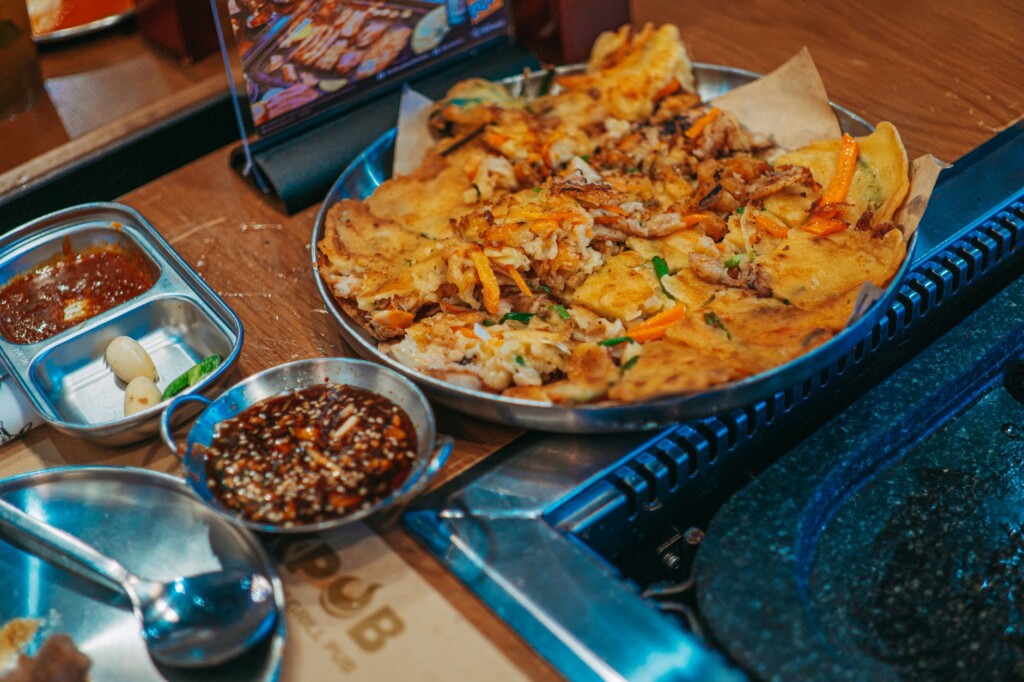
Rain in Korea sounds exactly like frying pajeon, and that’s why you crave it

You’re inside, it’s grey out, and rain is tapping the window. Suddenly you want something fried, hot, and a little chewy. In Korea, that’s not a random whim. It’s practically programmed into the language.
Here’s the trick. The sound of rain hitting the ground and the sound of batter hitting hot oil are described with the same Korean word. So when it rains, Koreans literally hear pancakes.
The word that ties rain to pancakes
The onomatopoeia is 지글지글 (jigeul-jigeul), the sizzling, bubbling sound of something frying in a pan. You also hear 부침개 부치는 소리 (buchimgae buchineun sori), “the sound of frying a pancake,” tossed around on rainy days.
Now listen to the rain. 주룩주룩 (juruk-juruk) is steady, pouring rain. But a lighter, pattering rain gets described with sounds that land close to the sizzle of oil. Many Koreans will tell you the two really do resemble each other, and that resemblance is enough to set off the craving. It’s a learned association passed down for generations, dressed up as a coincidence of sound.
There’s even a saying for it. 비 오는 날엔 파전에 막걸리 (bi oneun naren pajeone makgeolli), “on a rainy day, pajeon with makgeolli.” Ask almost anyone in Korea and they’ll finish the phrase for you.
Why mid-October is peak pajeon weather
Right now matters. Mid-October brings the rainy tail end of autumn, those cool, damp, grey afternoons before winter clamps down. The air turns sharp, you want to stay in, and comfort food starts calling. This is prime season for one of Korea’s most beloved food customs: 파전 (pajeon), green onion pancake, with a bowl of 막걸리 (makgeolli), cloudy rice wine.
The pairing isn’t accidental either. Hot, savory, slightly oily pajeon against cold, tangy, fizzy makgeolli is a contrast that just works, especially when it’s wet outside and warm in.

What’s actually on the plate
Pajeon is a batter of flour, egg, and water, loaded with whole stalks of green onion and fried until the edges go crisp. The classic upgrade is 해물파전 (haemul pajeon), seafood pancake, with shrimp, squid, and clams folded in.
- 파전 (pajeon), green onion pancake, the standard rainy-day order.
- 해물파전 (haemul pajeon), the loaded seafood version.
- 부침개 (buchimgae), the umbrella word for Korean savory pancakes.
- 김치전 (kimchijeon), made with chopped kimchi, tangy and spicy.
Makgeolli is low in alcohol, lightly sweet, and fizzy. You stir the bottle before pouring, because the good stuff settles. It comes in a wide bowl, not a glass, and you drink it in gulps rather than sips.
Say it like you mean it
A few phrases will make a rainy day in Korea feel completely different. Try them with a friend when the clouds roll in.
- 비 온다 (bi onda), “it’s raining.” Casual, said while glancing out the window.
- 파전 먹고 싶다 (pajeon meokgo sipda), “I want to eat pajeon.” The natural reflex once rain starts.
- 막걸리 한잔 할까요? (makgeolli hanjan halkkayo?), “shall we have a glass of makgeolli?” A warm, inviting question.
- 날씨 때문에 (nalssi ttaemune), “because of the weather.” Perfect excuse, nobody will argue.
Notice how 한잔 (hanjan) literally means “one glass” but rarely means exactly one. It’s an invitation to sit down and stay a while.
Make the moment yourself
You don’t need to be in Seoul for this. The recipe is forgiving, and the ritual travels.
- Whisk flour and cold water into a loose batter, thinner than you’d expect.
- Lay green onions flat in a hot, oiled pan, then pour batter over them.
- Fry it hotter and longer than feels comfortable. The crispy edge is the whole point.
- Flip once, press it down, and let the bottom crackle.
Make a quick dipping sauce with soy sauce, a splash of vinegar, and a pinch of chili flakes. Pour the makgeolli cold. Then open a window, let the rain in a little, and listen. The 지글지글 (jigeul-jigeul) from your pan and the sound outside really will start to blur.
That’s the whole lesson, honestly. Korean doesn’t just name the rain, it connects it to a smell, a taste, and a feeling of being cozy indoors. Next time it drizzles, you’ll know exactly what your stomach is trying to tell you.
Practice What You Learned
Try these interactive quizzes related to this topic:












Responses