
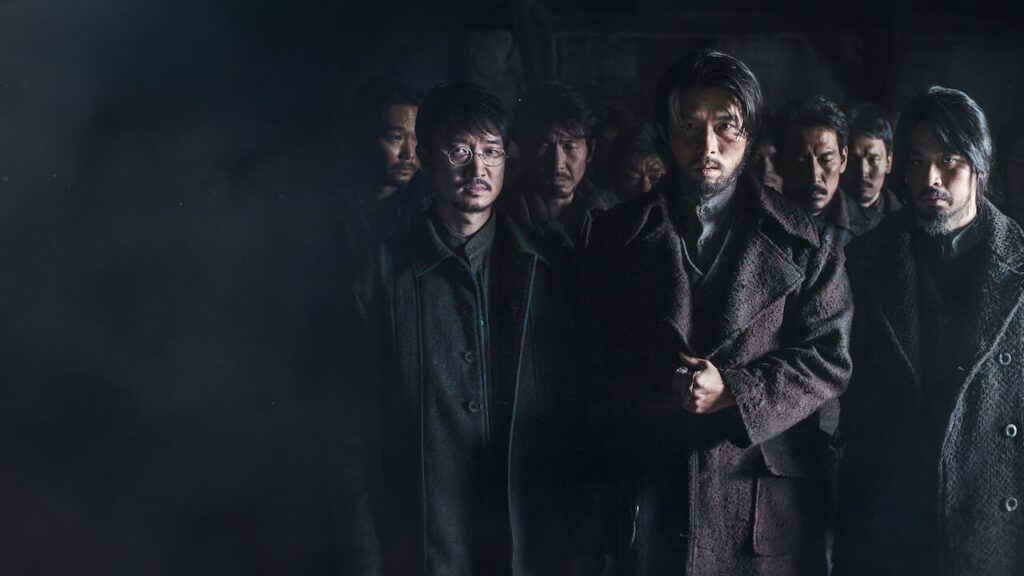
Why Koreans Still Draw a Hard Line Between Traitors and Freedom Fighters

If you spend enough time in Korea—watching films, reading the news, or simply chatting with locals about history—you’ll eventually encounter two words spoken with very different emotional weight: 친일파 (chinilpa, pro-Japanese collaborators) and 독립운동가 (dongnip-undongga, independence activists). To an outsider, these might sound like dusty historical categories. To Koreans, they are living moral touchstones that still shape politics, family reputations, and national identity more than a century later.
Understanding why this distinction carries such enormous weight is one of the most rewarding steps in truly understanding Korean culture. Let’s explore the history, the emotions, and the vocabulary behind it.
The Historical Wound That Never Fully Healed
Korea was under Japanese colonial rule from 1910 to 1945—a period known in Korean as 일제강점기 (Ilje-gangjeomgi, the Japanese occupation era). This was not a gentle administration. Koreans were forced to abandon their language in schools, adopt Japanese names, and provide labor and resources for Japan’s war effort. Cultural erasure and human rights abuses were systematic.
During this period, some Koreans chose to resist, forming underground networks, armed resistance groups, and a government-in-exile. Others chose to cooperate with the colonial authorities—sometimes for survival, often for wealth and power. This fork in the road created a moral divide that Korea has never stopped debating.
Why It Still Matters Today
Here is the crucial point for learners: this is not merely academic history. The consequences rippled directly into modern Korea.
- Many collaborators were never punished. After liberation in 1945, and especially after the Korean War, the urgent priorities of rebuilding and anti-communism meant that many former collaborators retained their positions in government, police, business, and academia. Meanwhile, some independence fighters and their families lived in poverty.
- Wealth and status were inherited. Descendants of collaborators sometimes held onto land and influence, while descendants of resistance fighters received little recognition until decades later.
- It remains a political flashpoint. Accusations of being 친일 (chinil, pro-Japanese) are still hurled in modern political debate, and controversies about textbooks, statues, and reparations regularly make headlines.
In short, the question of who resisted and who collaborated is tangled up with questions of justice, fairness, and whether wrongs were ever properly corrected. That’s why the emotion runs so deep.
Essential Vocabulary for the Conversation
To follow discussions—or films—about this era, these terms are indispensable:
- 독립 (dongnip) — independence
- 해방 (haebang) — liberation (specifically August 15, 1945)
- 친일파 (chinilpa) — pro-Japanese collaborators
- 매국노 (maeguknno) — traitor to one’s country (a very strong, insulting term)
- 애국자 (aegukja) — patriot
- 밀정 (miljeong) — a secret spy or informant
- 광복절 (Gwangbokjeol) — National Liberation Day, celebrated every August 15
Learner tip: Notice that 매국노 (maeguknno) literally combines 매 (mae, to sell), 국 (guk, country), and 노 (no, slave/servant)—”one who sells out the country.” Breaking down Sino-Korean words like this makes them far easier to remember.
How Korean Cinema Keeps the Memory Alive
One of the best ways for learners to absorb this cultural weight is through film. Korean cinema has repeatedly returned to the colonial era, and three films in particular are essential viewing:
- 암살 (Amsal, “Assassination,” 2015) — Follows a team of independence fighters planning to assassinate a Japanese commander and a Korean collaborator. It dramatizes both heroism and betrayal.
- 밀정 (Miljeong, “The Age of Shadows,” 2016) — Explores the murky world of spies and double agents, where loyalty is never certain. The very title, 밀정, is the vocabulary word above.
- 하얼빈 (Harbin, 2024) — Depicts the real historical assassination of Japanese statesman Itō Hirobumi by Korean independence activist An Jung-geun in 1909.
These films are not just entertainment. They are part of how each generation of Koreans processes the past and reaffirms its values. When a Korean watches a collaborator character betray the resistance, the reaction is visceral—because the moral stakes still feel present.
What This Teaches Us About Korean Values
The intensity of the collaborator-versus-fighter debate reveals something deeper about Korean culture: a strong sense of 정의 (jeong-ui, justice) and a belief that historical wrongs deserve acknowledgment. It also reflects the value placed on 애국심 (aeguksim, patriotism) and collective memory.
For international learners, appreciating this helps you avoid a common misstep—treating Korea’s relationship with Japan or its colonial history as a simple, resolved matter. It is neither simple nor fully resolved, and sensitivity here signals genuine cultural respect.
A Practical Takeaway
You don’t need to become a historian. But if you’re learning Korean, try this: the next time August 15 approaches, notice how the phrase 광복절 (Gwangbokjeol) appears everywhere. Watch one of the three films above with Korean subtitles, and listen for the vocabulary in this article. You’ll not only reinforce your language skills—you’ll understand why, when Koreans talk about 친일파 and 독립운동가, they are really talking about who they are and what they stand for.
History, in Korea, is never quite past tense. And that emotional continuity is exactly what makes the language and culture so alive to learn.
Practice What You Learned
Try these interactive quizzes related to this topic:











Responses