

Where Koreans Go on New Year’s Eve (Insider’s Guide)

As December 31st approaches, something electric fills the air in Korea. While many countries celebrate New Year’s Eve with fireworks and champagne, Koreans have their own unique twist on ringing in the new year. From Buddhist temple ceremonies to massive outdoor festivals, Korean New Year’s Eve (or 새해 전야 (saehae jeonya) – New Year’s Eve) is an experience that beautifully blends ancient traditions with modern celebrations. Whether you’re planning to spend the holiday in Korea or just curious about how Koreans countdown to midnight, this insider’s guide will show you exactly where the locals go and what makes each celebration special.
Bosingak Bell Ringing Ceremony: Seoul’s Iconic Countdown

The most famous New Year’s Eve destination in Korea is undoubtedly the 보신각 (Bosingak) Bell Ringing Ceremony in central Seoul. This centuries-old tradition draws massive crowds to Jongno, where the historic bell tolls exactly 33 times at midnight to welcome the new year. The number 33 holds deep Buddhist significance, representing the 33 steps to enlightenment.
What makes this celebration truly special is the blend of tradition and modernity. While the 타종식 (tajongshik) – bell-ringing ceremony follows ancient protocols, the surrounding streets transform into a massive street party. You’ll hear people shouting 새해 복 많이 받으세요! (saehae bok mani badeuseyo) – “Happy New Year!” or more casually, 새해 복 많이! (saehae bok mani) – “Lots of luck in the new year!”
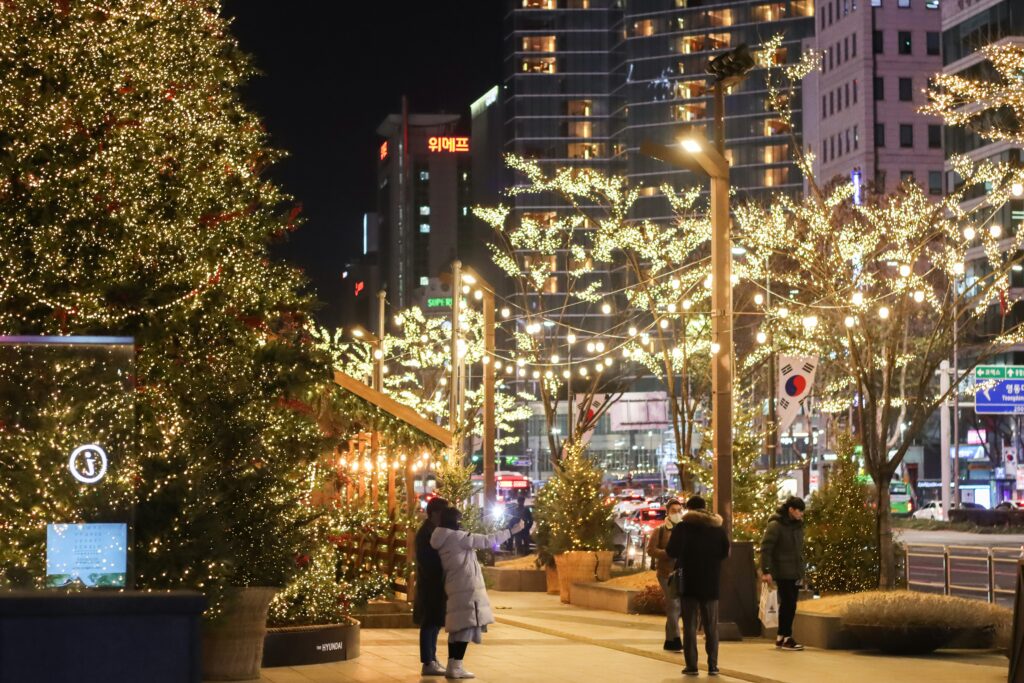
The area around City Hall and Gwanghwamun Square becomes pedestrian-only, with live K-pop performances, food stalls, and light shows. If you’re planning to attend, arrive by 9 PM to secure a good spot, and dress warmly—Seoul winters are no joke! The temperature often drops to 영하 (yeongha) – below zero, so layers are essential.
Pro tip: The crowds can reach hundreds of thousands, so keep your valuables secure and plan your exit strategy. Many locals actually prefer to watch the ceremony on 생방송 (saengbangsong) – live broadcast from the comfort of nearby cafes or restaurants.
Temple Stays: A Spiritual Start to the New Year

For a more serene and meaningful experience, many Koreans choose to spend New Year’s Eve at a Buddhist temple participating in a 템플스테이 (tempelstei) – temple stay program. This is particularly popular among young Koreans seeking a peaceful start to the year away from the city’s chaos.
At temples like Bongeunsa in Seoul or Haedong Yonggungsa in Busan, you can participate in the 제야의 종 (jeyaui jong) – New Year’s Eve bell ceremony. Unlike Bosingak’s public spectacle, temple bell ceremonies are meditative experiences where participants can personally ring the bell while making wishes for the new year. The deep, resonant sound of the 범종 (beomjong) – temple bell is believed to cleanse away the previous year’s troubles.
Temple stay programs typically include a vegetarian 사찰 음식 (sachal eumsik) – temple cuisine dinner, evening 예불 (yebul) – prayer service, and often a sunrise ceremony on New Year’s Day. Participants wear comfortable 수련복 (suryeonbok) – training clothes and follow the monks’ simple routine.
If you’re interested in experiencing Korean culture at this depth, understanding the language becomes crucial. The monks often share wisdom and New Year’s messages in Korean, making it a perfect opportunity to practice your listening skills. At uBitto, learners can explore cultural vocabulary and expressions used in traditional settings, helping you fully appreciate experiences like temple stays.
Beach Sunrises: Coastal Celebrations
While many countries focus on the midnight countdown, Koreans have an equally important New Year’s tradition: watching the first 일출 (ilchul) – sunrise of the year. Though technically New Year’s Day rather than New Year’s Eve, many people head to coastal destinations on December 31st to secure their spots for the morning sunrise.
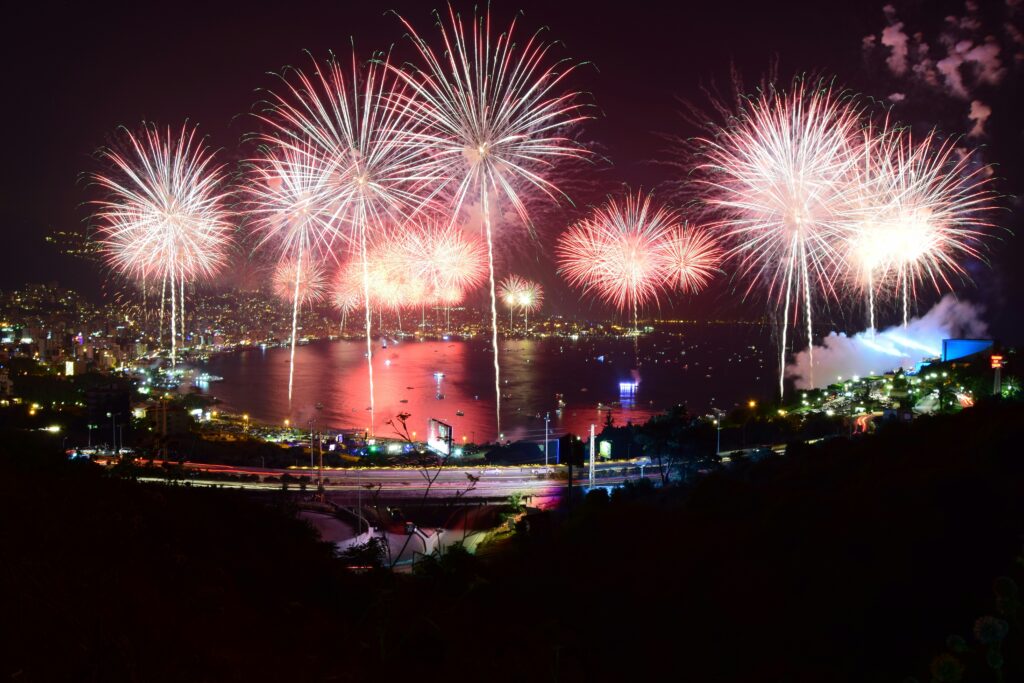
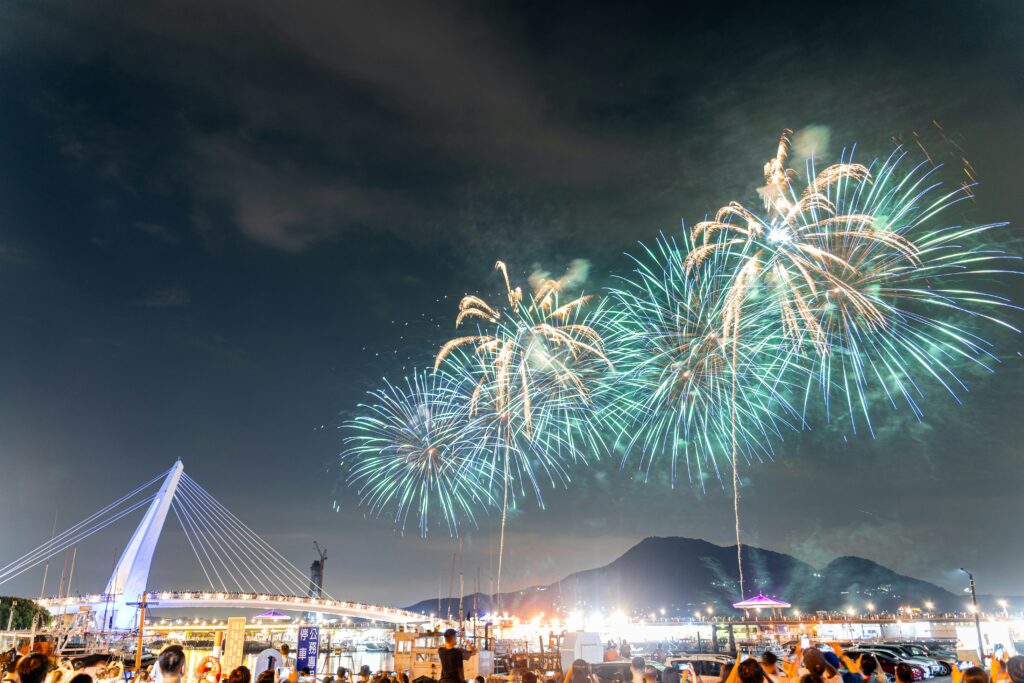
Popular destinations include 정동진 (Jeongdongjin) Beach in Gangwon Province, known as one of Korea’s easternmost points, and 해운대 (Haeundae) Beach in Busan. These beaches host all-night festivals with 불꽃놀이 (bulkkotnori) – fireworks, live music, and food vendors. Visitors bundle up in winter coats, share 어묵 (eomuk) – fish cake skewers and hot 호떡 (hotteok) – sweet pancakes while waiting for dawn.
The tradition of 해돋이 (haedoji) – watching the sunrise stems from the belief that witnessing the first sunrise brings good fortune. Many people write wishes on paper lanterns or shout their hopes toward the rising sun. You’ll hear phrases like 소원을 빌다 (sowoneul bilda) – to make a wish, as people greet the new year with optimism.
If you’re planning a beach countdown, bring: a thick blanket or 돗자리 (dotjari) – picnic mat, hand warmers called 핫팩 (haetpaek), thermoses of hot drinks, and snacks. Public transportation often runs special all-night services on New Year’s Eve, called 심야버스 (simyabeoseu) – late-night buses.
Hongdae and Gangnam: Modern Party Districts
For those who prefer a more contemporary celebration, Seoul’s party districts like 홍대 (Hongdae) and 강남 (Gangnam) offer countless options. These neighborhoods transform into massive street parties where young Koreans and international visitors mingle.
In Hongdae, known for its artistic and youthful vibe, clubs and bars host special 카운트다운 파티 (kaunteudaun pati) – countdown parties. The streets fill with 버스킹 (beoseuking) – busking performers, and outdoor stages feature DJs and live bands. Many venues offer 무제한 음주 (mujehan eumju) – unlimited drinking packages, though be cautious as these can lead to overindulgence.
Gangnam offers a more upscale experience with luxury hotels hosting formal 송년회 (songnyeonhoe) – year-end parties. High-end clubs in the Apgujeong and Cheongdam areas attract celebrities and feature internationally known DJs. Expect to hear a mix of K-pop hits, EDM, and people toasting with 건배! (geonbae) – “Cheers!”
Important vocabulary for party-goers: 입장료 (ipjangnyo) – entrance fee, 예약 (yeyak) – reservation, 드레스 코드 (deureseu kodeu) – dress code, and 대리 운전 (daeri unjeon) – designated driver service, which is commonly used in Korea.
Navigating these social settings requires not just language skills but cultural understanding. Knowing when to use formal versus casual speech, how to properly toast, and understanding drinking culture etiquette all enhance the experience. uBitto’s programs help learners understand these nuanced social situations, making real-world interactions more comfortable and authentic.
Home Celebrations and Year-End Shows
Not all Koreans venture out into the cold on New Year’s Eve. Many families and friends prefer cozy home gatherings watching special 연말 특집 (yeonmal teukjip) – year-end special programs on television. Korean broadcasting companies pull out all the stops with celebrity-packed variety shows, music performances, and countdown specials.
Popular shows include KBS’s “Gayo Daechukje,” MBC’s “Gayo Daejejeon,” and SBS’s “Gayo Daejeon”—massive K-pop festivals featuring the year’s biggest artists. These shows typically run from 8:30 PM until just after midnight, with the countdown integrated into the broadcast.
Home celebrations often feature special foods. While Western champagne has become popular, many Koreans enjoy 막걸리 (makgeolli) – traditional rice wine or 소주 (soju). Food spreads might include 치킨 (chikin) – Korean fried chicken, 피자 (pija) – pizza, and various 안주 (anju) – drinking snacks. Some families prepare 떡국 (tteokguk) – rice cake soup, which is traditionally eaten on New Year’s Day but sometimes enjoyed at midnight.
The phrase you’ll hear most during these gatherings is 수고했어 (sugohaesseo) – “you worked hard” or 고생했어 (gosaenghaesseo) – “you’ve been through a lot,” as people reflect on the year’s challenges and express gratitude to loved ones.
For language learners, these television programs offer excellent listening practice. The mix of formal announcements, casual banter between celebrities, and audience reactions provides exposure to various speech levels and natural Korean. Watching with Korean subtitles can significantly boost your comprehension—something you can practice year-round through uBitto’s interactive learning tools.
Ready to Experience Korean New Year Like a Local?
New Year’s Eve in Korea offers something for everyone—from spiritual temple ceremonies to energetic street parties, peaceful beach sunrises to cozy home gatherings. Understanding the language and culture behind these celebrations transforms you from a tourist into a participant, allowing you to connect more deeply with Korean traditions and people.
Whether you’re planning your first New Year’s Eve in Korea or simply want to understand how Koreans celebrate, mastering key vocabulary and cultural context makes all the difference. The phrases, traditions, and social customs you’ve learned about here are just the beginning of your journey into Korean language and culture.
As you prepare for your own New Year celebration—wherever that may be—why not make a resolution to deepen your Korean language skills? From understanding temple ceremonies to navigating party conversations, from ordering street food to making meaningful New Year’s wishes, language opens doors to authentic experiences.
새해 복 많이 받으세요! May your new year be filled with success, and may your Korean language journey bring you closer to the culture and people you’re passionate about. Start your learning adventure today and make next year’s Korean celebration even more meaningful!
Practice What You Learned
Try these interactive quizzes related to this topic:






Responses